Jetty & Berths
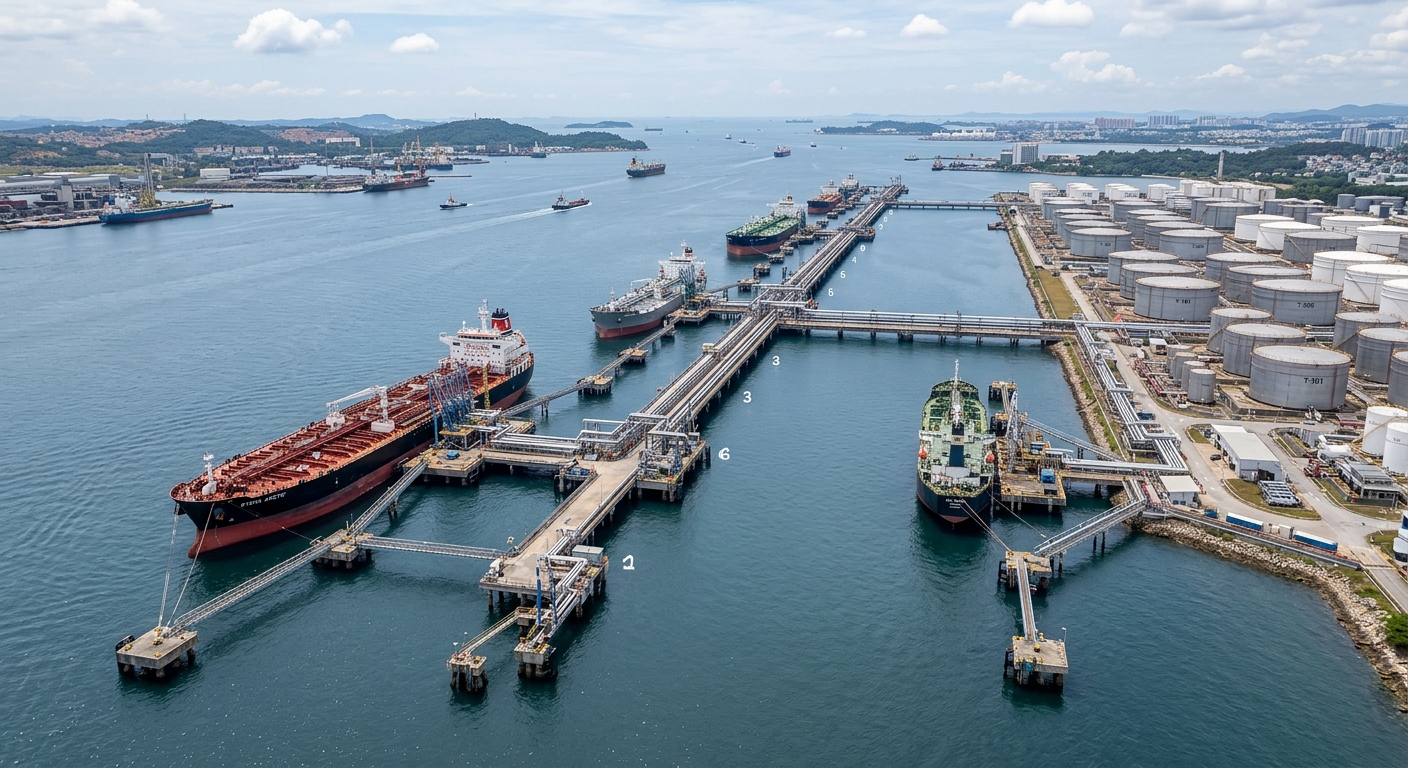
Six deep-water berths on the Oude Maas handling ocean-going vessels and inland barges.
Berth configuration
Our jetty provides six berths with deep-water access, arranged so that ocean-going vessels and inland barges can be handled in parallel rather than in sequence. Dedicated barge berths keep smaller craft separate from the main vessel berths, which reduces both waiting time and the risk of congestion.
Loading equipment
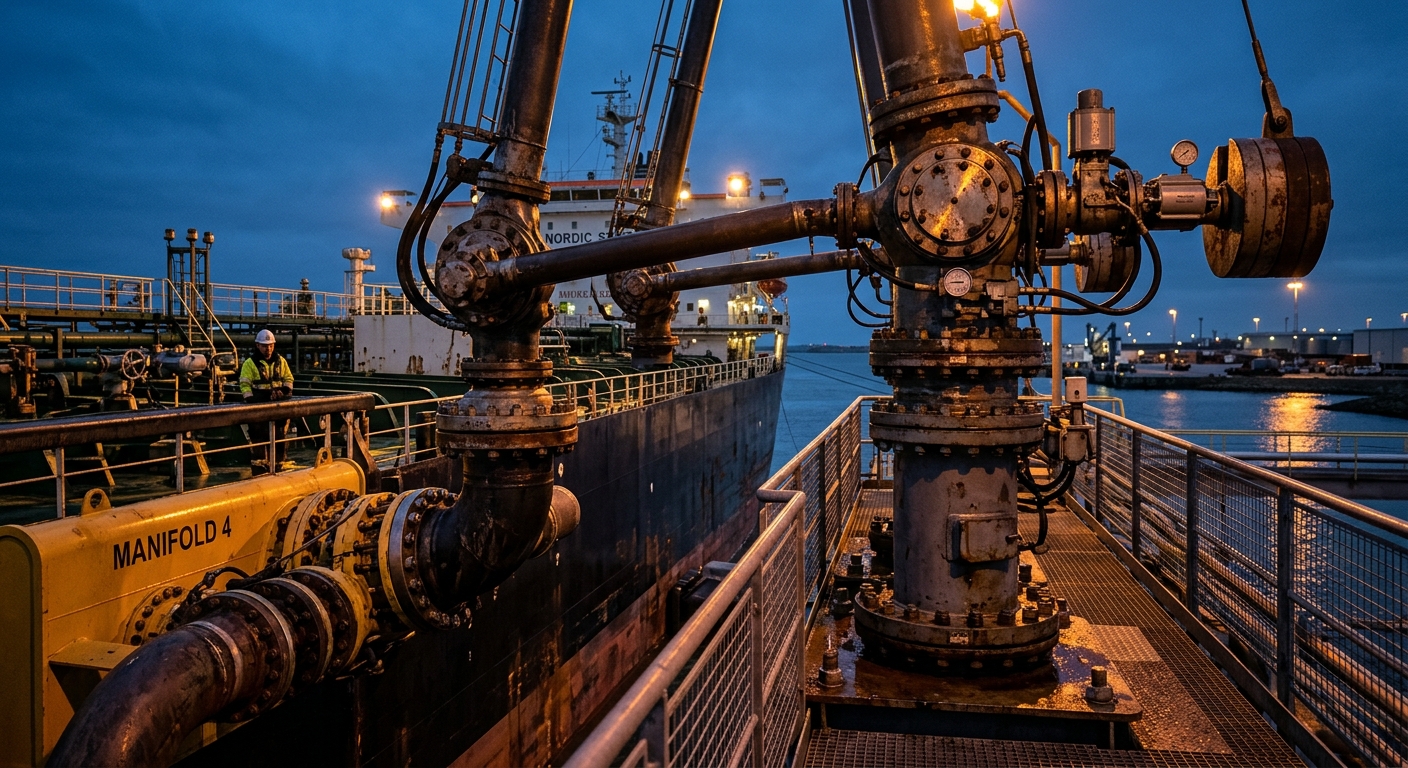
Vessel berths are equipped with marine loading arms, with hose connections available for smaller parcels and for vessels whose manifold configuration favours hoses. Arms are fitted with quick-release couplings, powered emergency release and continuous position monitoring.
Berthing and mooring
Mooring arrangements include quick-release hooks and shore-based line handling so that berthing and unberthing are completed safely and without unnecessary delay. Berthing is coordinated with pilots, tugs and the port authority, with mooring analysis available for vessels outside the standard envelope.
Marine safety
The jetty is protected by foam and water monitors, with spill response equipment stored adjacent to each berth. Operations are suspended under defined wind and sea-state limits, and every transfer is supervised from the control room with a trained marine operator on the jetty.
Berth availability
Berth windows are planned against vessel calls, tidal constraints and barge schedules. Nominate your vessel and we will confirm a window along with mooring and manifold requirements.
Berth specification
| Berth | Service | Loading equipment | Typical vessels |
|---|---|---|---|
| Berth 1 | Ocean-going vessels | Marine loading arms with emergency release | MR and LR1 product tankers |
| Berth 2 | Ocean-going vessels | Marine loading arms, hose connection for small parcels | MR product tankers, chemical tankers |
| Berth 3 | Ocean-going vessels | Marine loading arms | Handysize and MR tankers |
| Berth 4 | Short-sea and coasters | Loading arms with flexible hose sets | Coasters and short-sea tankers |
| Berth 5 | Inland barges | Hose connections with vapour return | Inland tank barges |
| Berth 6 | Inland barges and bunkering | Hose connections | Barges and bunker barges |
Deep-water access with efficient turnaround
The jetty sits on the Oude Maas with direct access to the port's main channels. That position gives us the draught and the manoeuvring space to handle the vessel sizes our customers actually charter, without the waiting that comes with a constrained berth pocket.
Parallel berths and dedicated barge positions mean a large vessel call does not stop barge movements, and barge traffic does not delay a vessel. For customers running both, that separation is worth more than the headline transfer rate.
Mooring is fast and predictable, loading arms are prepared before the vessel is all fast, and sampling is arranged so that quality clearance is not the bottleneck at completion.
- Deep-water access to the port's main channels
- Parallel vessel and barge handling without congestion
- Loading arms prepared before the vessel is all fast
- Sampling arranged so quality clearance is not the bottleneck
Jetty and marine operations
Jetty berths extending into the harbour.
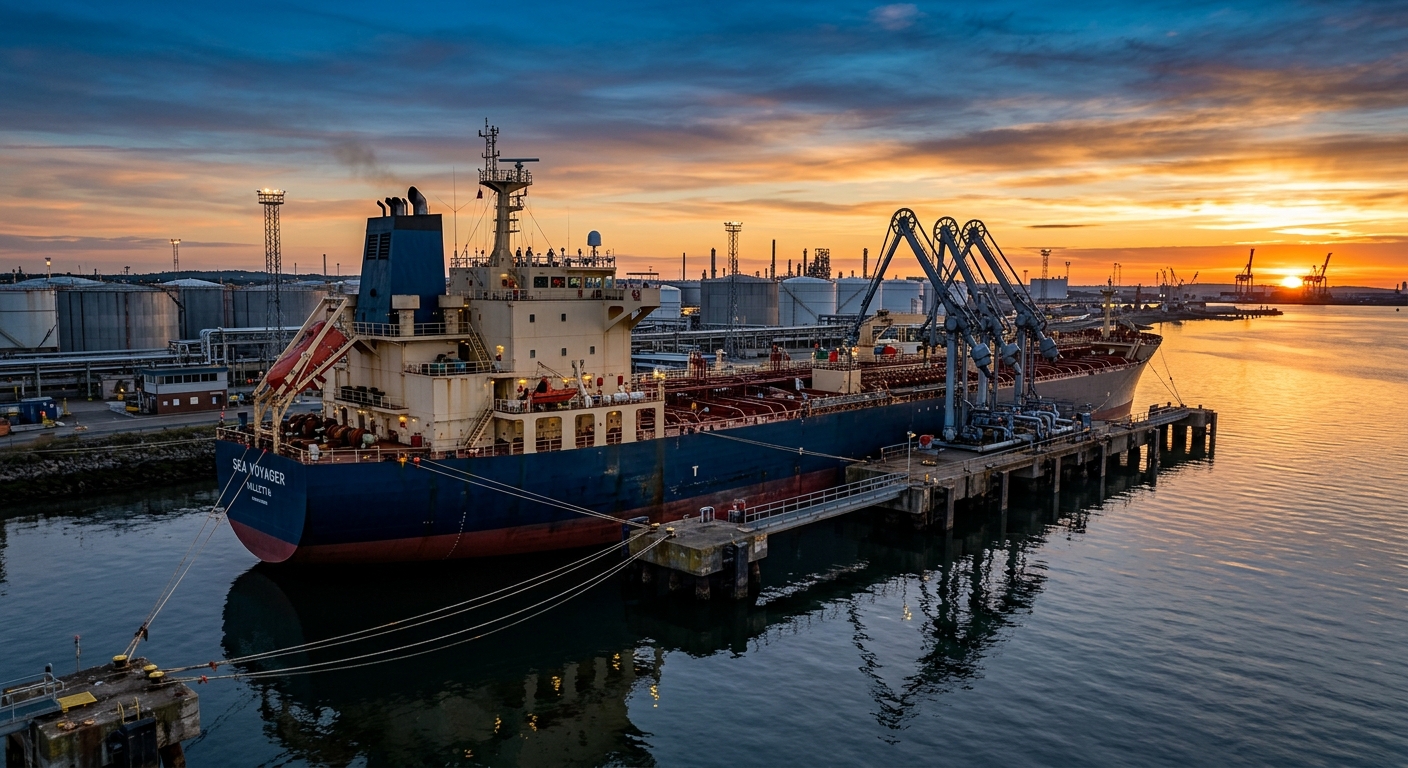
Vessel alongside with loading arms connected.
Marine loading arms with emergency release.
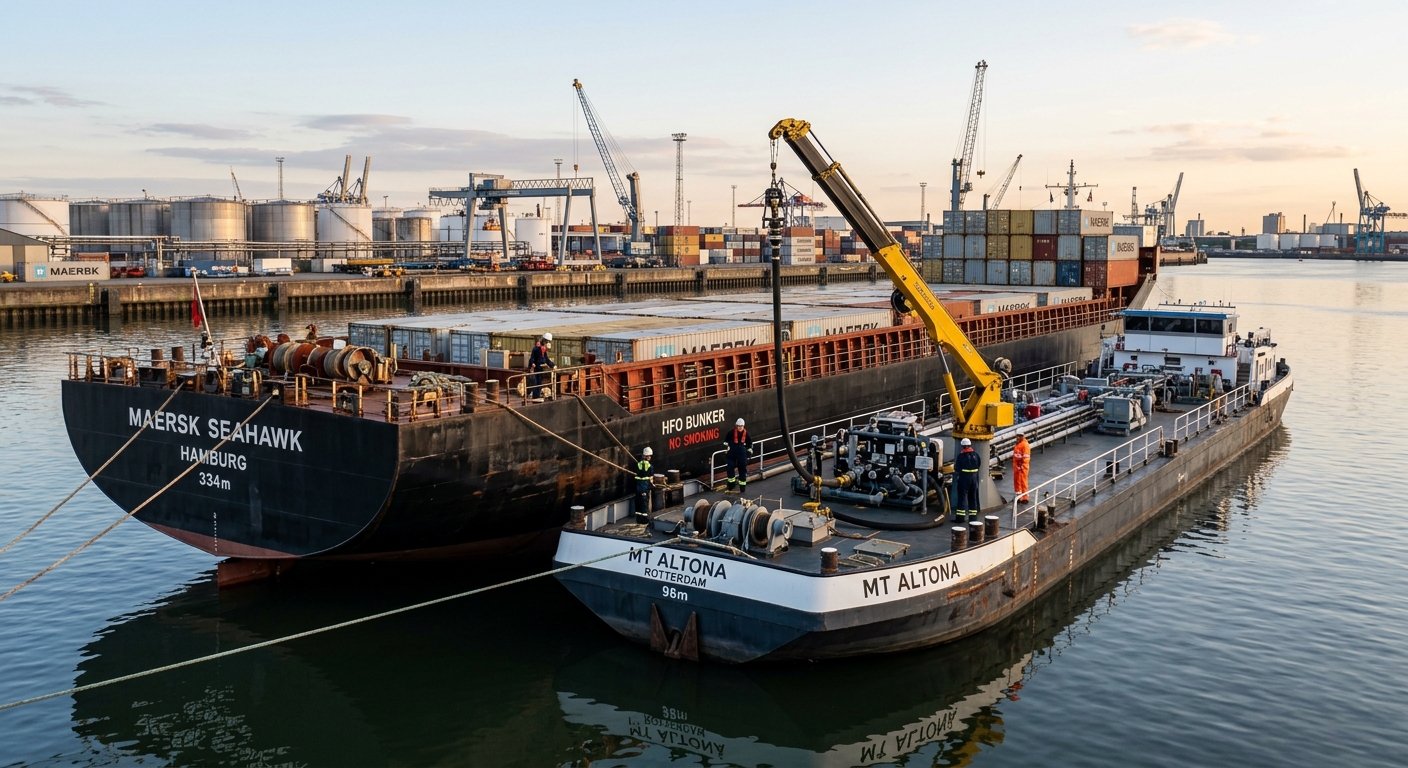
Bunkering alongside at the jetty.
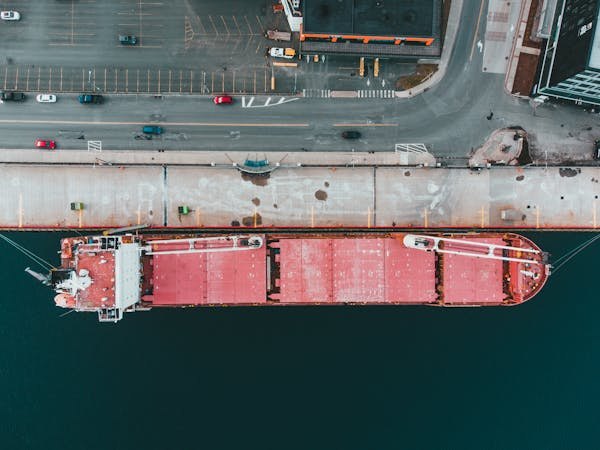
Vessel call at the terminal.
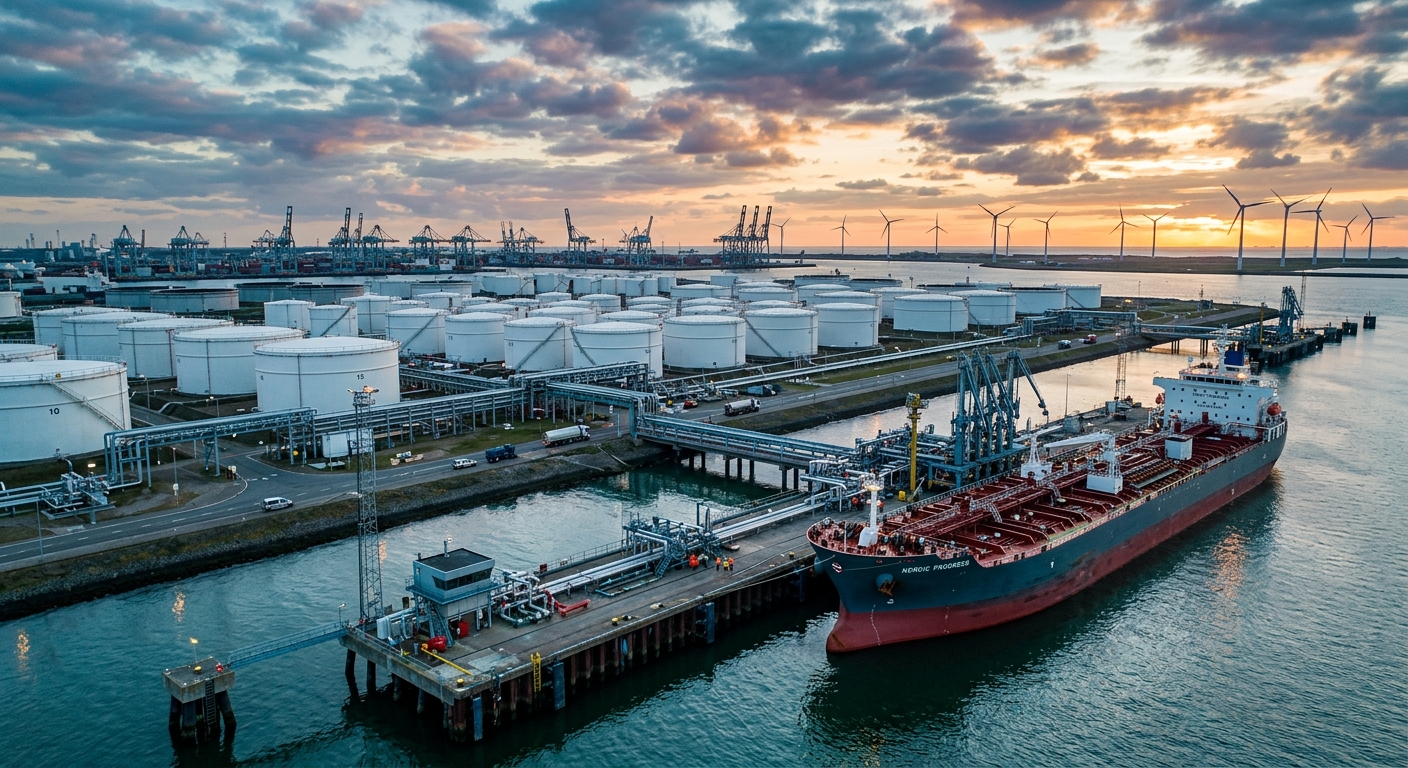
Terminal frontage on the Oude Maas.
Nominate a berth
Supply your vessel details, ETA and cargo and we will confirm a berth window and connection requirements.